
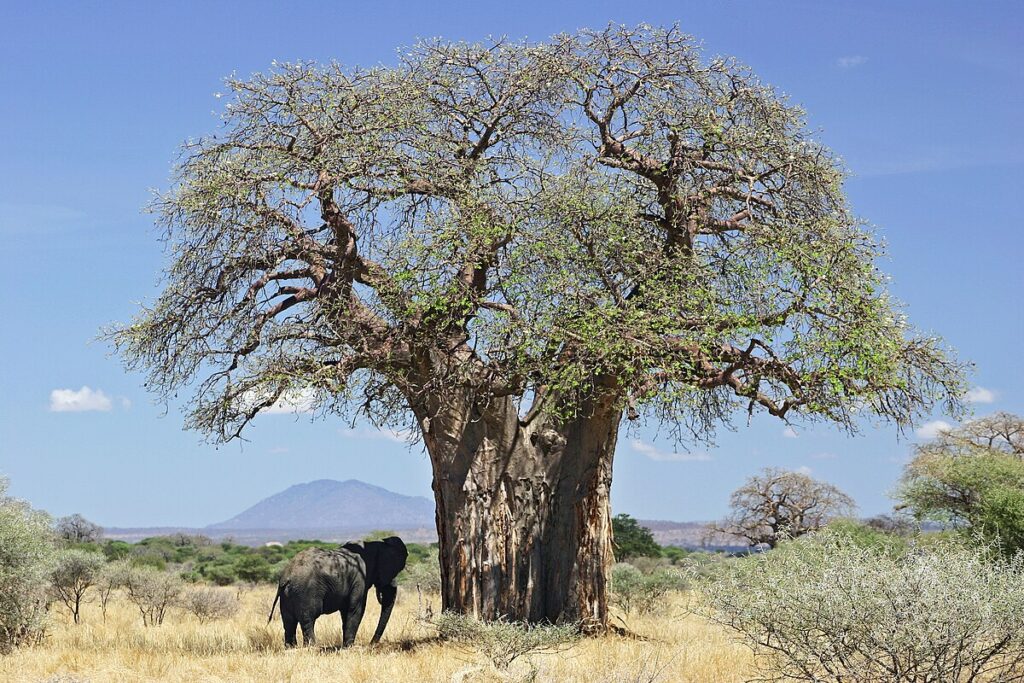
Uses: Baobab trees are known as the “Tree of Life” due to the various uses of their parts. The fruit, leaves, and bark are utilized for food, medicine, and fibers for making ropes and baskets.
Cultural Significance: Baobab trees hold cultural significance in many African societies, including Kenya, where they are often regarded as sacred symbols of wisdom, longevity, and resilience.
Economic Benefits: Baobab products have gained international popularity for their nutritional value, leading to economic opportunities for communities engaged in harvesting and processing baobab fruits and products.
Regions: Baobab trees are commonly found in dry, arid regions of Kenya, particularly in the coastal areas, northeastern Kenya, and parts of the Rift Valley.