
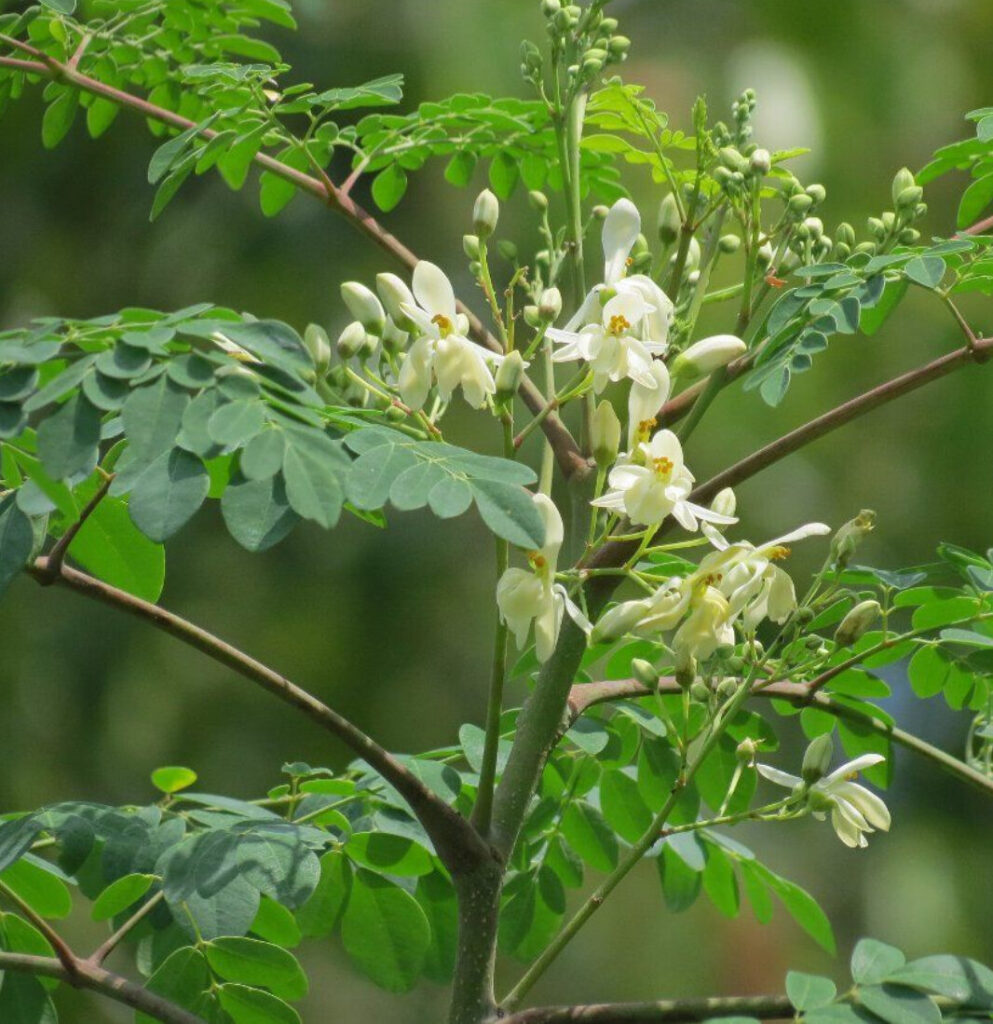
Uses: The Muringa tree is known for its highly nutritious leaves, seeds, and pods, which are used as a dietary supplement, herbal remedy, and natural water purifier. Moringa leaves are rich in vitamins, minerals, and antioxidants.
Cultural Significance: Muringa holds cultural and medicinal significance in many Kenyan communities, where it’s traditionally used to treat various ailments and boost nutrition, especially for vulnerable populations like children and pregnant women.
Economic Benefits: Moringa cultivation offers income opportunities for small-scale farmers, especially in rural areas. The plant’s leaves, seeds, and oil have commercial value in health food, herbal medicine, and cosmetic industries.
Regions: Moringa trees grow well in tropical and subtropical climates, thriving in various regions across Kenya, including coastal areas, western Kenya, and parts of the Rift Valley and eastern Kenya.